

Jardine Matheson’s high standards of governance ensure the long-term success of the company and our businesses. The stability provided by our robust governance framework has enabled Jardines to prosper over its almost 200-year history and into the future.
Read our 2025 Corporate Governance Report here.
Jardine Matheson is committed to high standards of governance. Our approach has evolved over many years, taking into account the Group’s size, structure, complexity of our businesses, as well as our long-term strategy.
An important part of strong governance is corporate stability. This is provided by the long-term stewardship of the founding family, together with related and like-minded shareholders who hold a significant proportion of the Company’s shares. This stability, coupled with an effective and robust corporate governance framework, supports the Board in delivering sustainable growth and ensures Jardines continues to uphold the characteristics and values that have enabled the Group to prosper.
Our stakeholders derive significant value from our long-term approach. It is therefore important that we continually adapt to changing circumstances in our markets, evolving stakeholder expectations, and best practices.
As an investment company holding a portfolio of market-leading businesses, we provide strategic direction to our portfolio companies through representatives on their respective boards. This drives long-term growth and value creation for both the individual companies and the Group as a whole.
In parallel, we continue to support our portfolio companies by leveraging the synergies of operating as a unified group. This includes maintaining a strong balance sheet, protecting the Group’s reputation and values, and providing leadership in areas such as sustainability and shared services.
Jardine Matheson Holdings
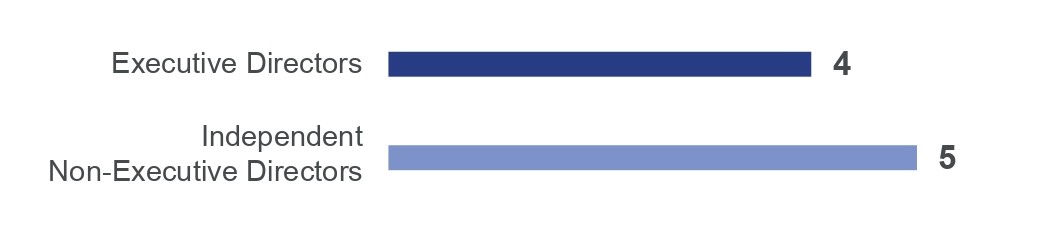
Jardines’ Board composition and management structure effectively support the operations and strategic growth of the Company and its portfolio companies. This is achieved by combining direct oversight of our own activities with active engagement in its portfolio companies through board representation. This approach establishes shared values, standards, and business relationships across markets, optimising opportunities while respecting the independence and accountability of each portfolio company’s executive team.
The Board’s stable composition and the way it operates enable us to take a long-term view as we seek to grow our business and pursue investment opportunities.
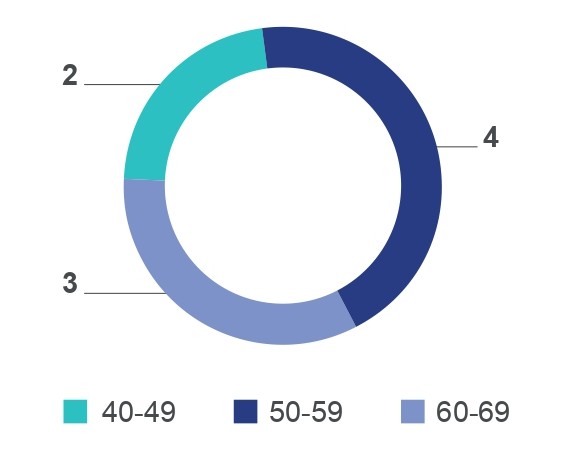
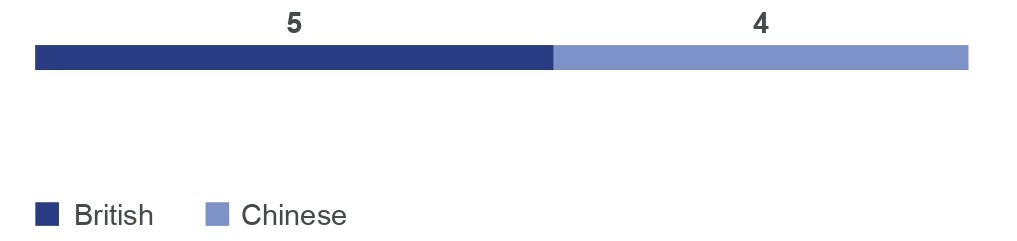
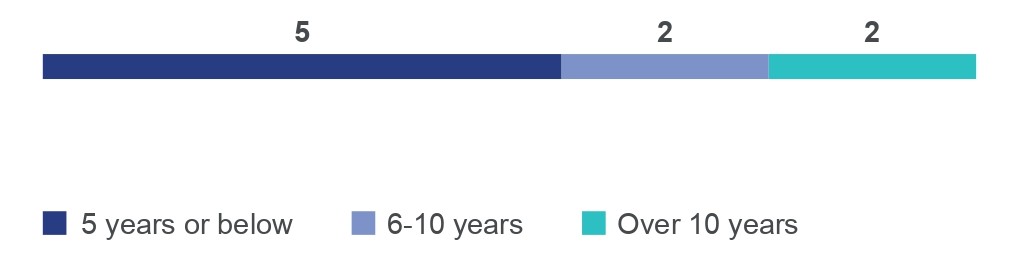
Learn more about the Board and executive management’s composition, detailed in accordance with the UK Listing Rules.
Audit Committee
The Audit Committee’s role is to monitor the effectiveness of the Company’s financial reporting, including ESG and climate-related financial disclosures, systems of internal control, and risk management. The Audit Committee also monitors the integrity of the Company’s external and internal audit processes.
For more information on the Audit Committee, access here
Nominations Committee
The Nominations Committee’s role is to assist the Board in overseeing the process for the appointment of the CEO of the Company, leading the process for nominations to the Board and its committees and assisting the Chairman of the Board in reviewing the Board’s effectiveness.
Remuneration Committee
The Remuneration Committee’s role is to advise on the formulation and implementation of a reward strategy for Jardine Matheson, review the design of short- and long-term performance-related incentives and review and make recommendations on the overall compensation costs and philosophy of Jardines.
The Company is incorporated in Bermuda. The primary listing of the Company’s equity shares is in the Equity Shares (Transition) Category (the ‘Transition Category’) of the Main Market of the London Stock Exchange (the ‘LSE’). The Company also has secondary listings in Singapore and Bermuda. As the Company has only secondary listings on these exchanges, many of the listing rules of such exchanges are not applicable. Instead, the Company must release the same information in Singapore and Bermuda as it is required to release under the rules that apply to it as a result of being listed in the Transition Category on the LSE.
As a company incorporated in Bermuda, the Company is governed by:
The Bermuda Takeover Code for the Company is set out in the Regulations and is based on the UK City Code on Takeovers and Mergers. It provides an orderly framework within which takeover offers can be conducted and the interests of shareholders protected.
Other acquisition mechanisms available under the Bermuda Companies Act include schemes of arrangement, amalgamation and mergers. The Bermuda Companies Act provides a framework within which such procedures can be conducted and the interests of shareholders protected.
The shareholders can amend the Company’s Bye-Laws by way of a special resolution at a general meeting of the Company. The Company’s Bye-Laws were most recently amended at the 2025 AGM. The Company’s Bye-Laws are available here.
The Company’s listing in the Transition Category of the LSE means that it is bound by many, but not all, of the same rules as companies which fall within the Equity Shares (Commercial Companies) categories (the ‘Commercial Companies Category’) of the LSE. These include the UK Listing Rules (as defined below), the Disclosure Guidance and Transparency Rules (the ‘DTRs’) issued by the Financial Conduct Authority of the United Kingdom (the ‘FCA’), the UK Market Abuse Regulation (‘MAR’) and the Prospectus Rules: Admission to Trading on a Regulated Market. These rules and regulations cover areas including continuous disclosure, periodic financial reporting, disclosure of interests in shares, market abuse and the publication and content of prospectuses in connection with admission to trading or the offering of securities to the public. In addition, the Company is subject to regulatory oversight from the FCA, as the Company’s principal securities regulator, and is required to comply with the Admission and Disclosure Standards of the Main Market of the LSE.
The Company and its directors are also subject to legislation and regulations in Singapore relating, among other things, to insider dealing.
The Company is not required to comply with the UK Corporate Governance Code (the ‘Code’), which applies to all UK Commercial Companies Category issuers and sets out the governance principles and provisions expected to be followed by companies subject to the Code. However, the Company does have regard to the Code in its approach to corporate governance and disclosure.
When the shareholders approved the Company’s move to a standard listing from a premium listing in 2014 (under the LSE’s old listing regime), the Company stated that it intended to voluntarily maintain certain governance principles applicable to it at that time, by virtue of its premium listing. As a result, the Company adopted a number of governance principles (the ‘Governance Principles’) based on the applicable requirements for a UK premium listing in 2014, which went further than the standard listing requirements at the time.
The FCA reformed the UK listing regime in 2024, introducing new UK Listing Rules (the ‘UK Listing Rules’), replacing the previous UK premium and standard segments of the Main Market of the LSE with the Commercial Companies Category. As a result of these reforms, the listing of the Company’s equity shares was transferred to the new Transition Category.
Following these changes, the Company undertook a review of the Governance Principles in 2024, to ensure they remained appropriate and took into account market practice. Following the 2024 review, the Board considered that, while the Company continues to have no obligation to comply with the more onerous requirements imposed by its voluntary application of the Governance Principles, it was appropriate to retain them, subject to certain amendments which were appropriate to align more closely with, and have regard to, the UK Listing Rules to which other UK listed companies are subject.
The Company has regard to the UK Listing Rules applicable to the Commercial Companies Category, when applying the Governance Principles in relation to significant transactions and related party transactions. The key elements of the Governance Principles are as follows: