
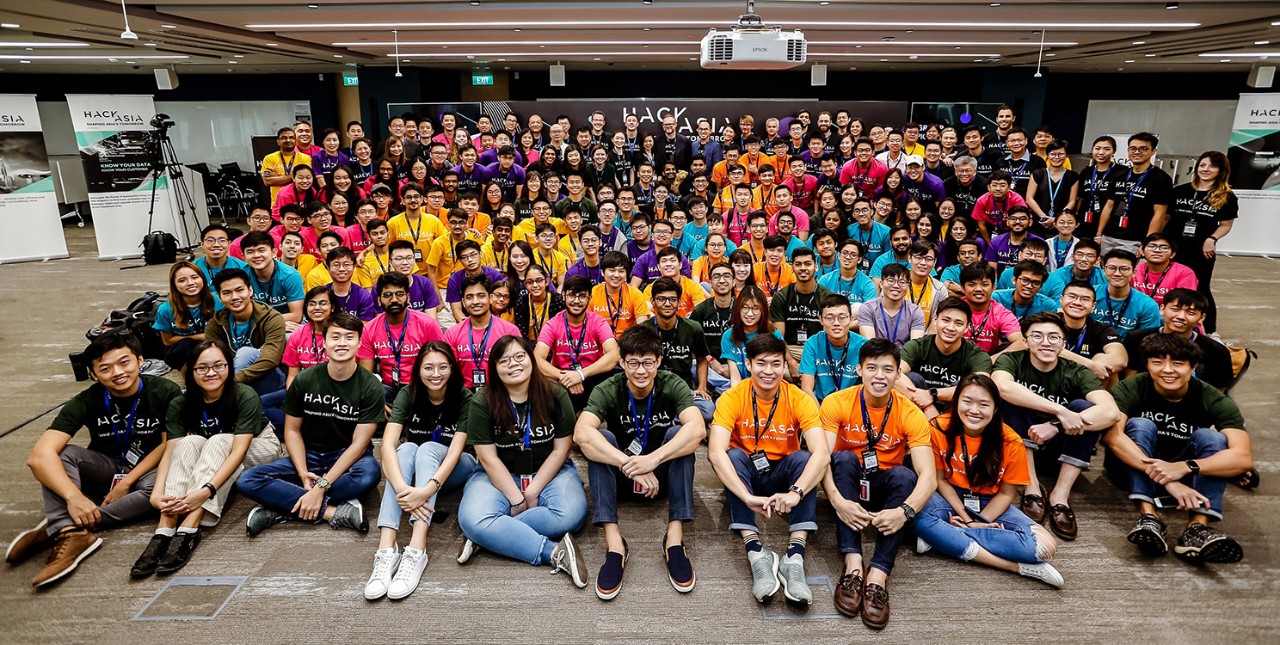
On 18 and 19 October 2019, more than 120 students (from an original 800 applicants) participated in the final round of Hack.Asia, an inaugural 48-hour hackathon organised by the Jardine Matheson Group (Jardines) and Daimler Group (Daimler), with support from the Singapore Economic Development Board (EDB). Held at the Amazon Web Services office, the hackathon saw 36 finalist teams comprising student entrepreneurs and innovators working against the clock to develop technology-driven solutions to address current challenges faced by Asian businesses and economies.
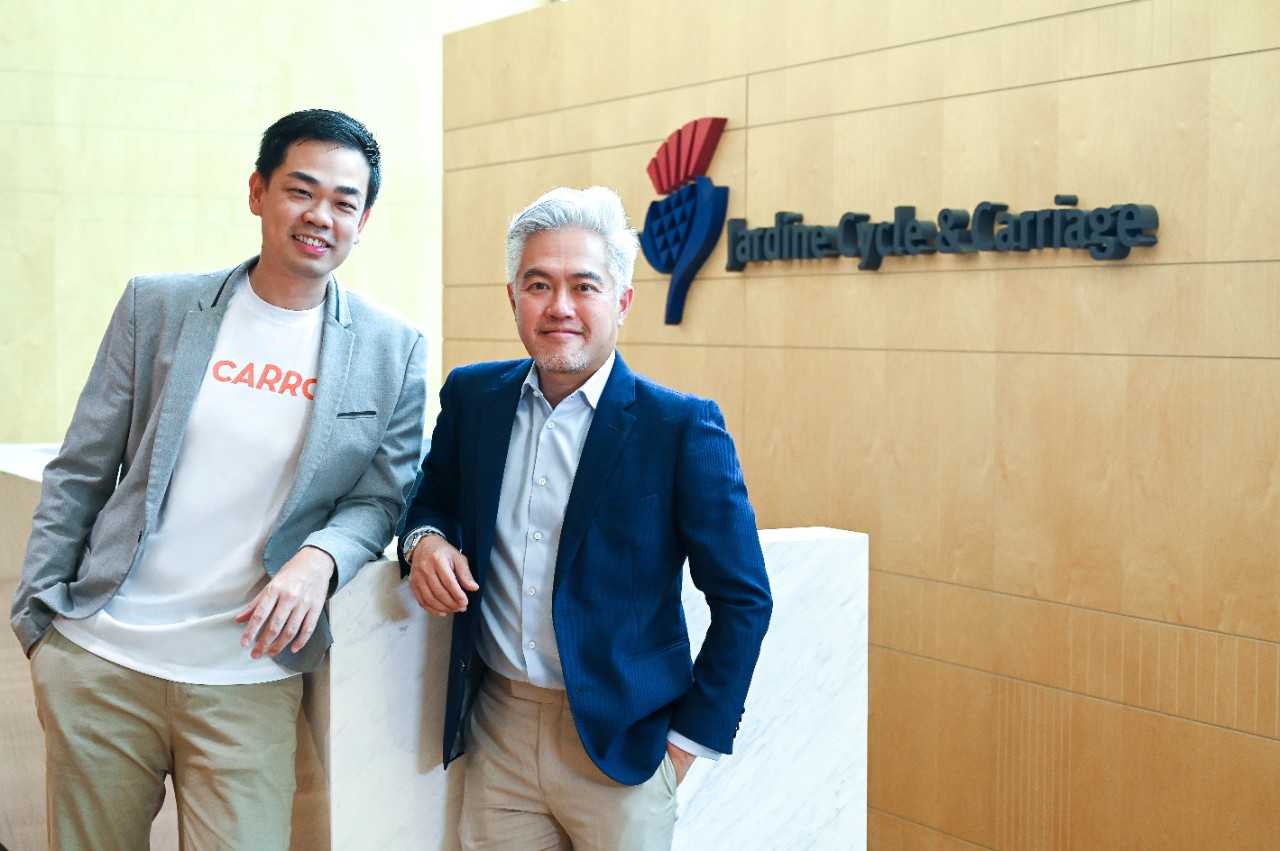
Mr. Ben Birks, Group Managing Director of Jardine Cycle & Carriage, said: “Through our partnership with Daimler and with the tremendous support of EDB, we received an overwhelming number of entries for the first Hack.Asia. We are very excited by the wide range of high calibre ideas we saw. As a Group committed to the growth of Asia, we were inspired by pitches that employ data-led solutions to address real-life issues currently impacting businesses and communities in the region. This reflects the passion, forwardthinking and progressive mindset of the region’s next-generation innovators, entrepreneurs and thinkers.”
Over 320 ideas generated over 8 weeks
The finalist teams were shortlisted from an initial call for entries where over 800 participants submitted a brief overview of how their ideas could address a specific challenge. From there, the six best ideas from each of the six categories were selected based on data methodology, creativity and originality, potential impact and feasibility of the solution. The shortlisted teams were then sponsored to come to Singapore for the hackathon to brainstorm and test their ideas, collaborate with mentors and pitch their proposals to the judging panel, which included key executives from Jardines, including Jardine Cycle & Carriage, Dairy Farm, Hongkong Land, Astra International and Innovate Jardines, as well as Daimler, including DigitalLife@Daimler and Daimler Financial Services Africa and Asia Pacific.
The youngest participants of Hack.Asia was a team comprising sisters – a 12-year old and 10-year old. The younger sister is also a coder and has been participating in hackathons since she was five and has experience interning at Microsoft.
Mr. Lim Kok Kiang, Assistant Managing Director of the Singapore Economic Development Board (EDB) said, “Through this inaugural hackathon, these students have discovered that they need to collaborate with their peers in Singapore and in other countries in solving the hackathon challenges. This goes to show that only by strengthening our status as a regional talent hub, where people of different backgrounds and diverse perspectives meet, will we be able to ensure that companies in Singapore can continue to develop new products, businesses and solutions to meet the demands of this fast-growing region.”
Winning ideas go on to compete in global hackathon
Two teams were awarded the grand prize of a sponsored trip to exhibit at the Four Years From Now (4YFN) startup conference in February 2020 in Barcelona, Spain, where they will be showcasing their solutions to more than 30,000 international visitors, from venture capitalists, technology companies to start-ups. The grand prize went to Team Cows Go Mu from Singapore (NUS, SMU and SUTD) and Team Codeblooded, from India (Sardar Patel Institute of Technology). Total cash prizes of SGD15,000 were awarded to the winning teams of each of the six categories.
Team Cows Go Mu proposed an integrated end-to-end predictive data for e-commerce. With machine learning at its core, the idea seeks to improve inventory management and ultimately customer satisfaction. “Our solution ensures that Dairy Farm customers can get what they want at the time they want it. Our solution leverages predictive forecasting to ensure that there is available stock for customers”, said Team Cows Go Mu.
As for Codeblooded, the dynamic team of three proposed using real-time data to detect various road conditions such as potholes and worn out road markings that contribute to traffic jams in cities. The system alerts commuters travelling through these unsafe zones using geofences. Emergency services such as ambulances can also use the service. Codeblooded’s idea also had a social agenda behind it. The team from Mumbai wanted to find a solution not just for traffic jams but also to make roads safer for people.
“Hack.Asia is our very first international hackathon and it has been a great experience, especially connecting with the other participants and industry experts. Our solution was based on the research and observations of traffic conditions in cities across the region, and we hope to help people understand the importance of solving traffic problems. Having a good user base would mean good quality data that supports machine learning, enabling this solution to be enhanced to better serve the community”, said Team Codeblooded.
Hack.Asia Debut
Hack,Asia is the first-ever hackathon organised by Innovate Jardines (IJ) – the digital business incubation and innovation arm of the Jardine Matheson Group.
Innovate Jardines General Manager, Mr. CK Yap, said “Given the footprint of Jardines in multiple industries in Asia, and the involvement of its strategic partners, Hack.Asia is the perfect platform to embrace the diversity of Asia, giving young innovators with diversified expertise an opportunity to showcase their creative ideas and solutions”.
Focusing on the future of business and mobility, the Hack.Asia 2019 challenge categories included: (1) create the supply chain of the future; (2) develop a smarter, greener building cooling system; (3) use data analytics to better serve automotive customers;(4) use social media analytics to better identify automotive leasing customers; (5) collate appropriate data to improve mobility services in cities; and (6) impart knowledge on IT security to employees through gamification and augmented reality.
Hack.Asia is also part of the DigitalLife@Daimler Campus Global Hackathon Series that has supported 14 hackathons in six countries since 2016. DigitalLife@Daimler brings together various activities associated with the digitalisation of Daimler and promotes the group’s Page 4 of 5 digital transformation in all areas – with a focus on people. Its aim is to bring together ideas and people, to make innovations visible, and to drive their implementation forward. DigitalLife’s working mode is international, interdisciplinary, and across all organisational structures.
For more information on Hack.Asia, please visit here.
About the Jardine Matheson Group
Jardine Matheson is a diversified Asian-based group with unsurpassed experience in the region, having been founded in China in 1832. It has a broad portfolio of market-leading businesses, which represent a combination of cash generating activities and long-term property assets and are closely aligned to the increasingly prosperous consumers of the region. The Group’s businesses aim to produce sustainable returns by providing their customers with high quality products and services.
Jardine Matheson operates principally in Greater China and Southeast Asia, where its subsidiaries and affiliates benefit from the support of the Group’s extensive knowledge of the region and its long-standing relationships. These companies are active in the fields of motor vehicles and related operations, property investment and development, food retailing, health and beauty, home furnishings, engineering and construction, transport services, restaurants, luxury hotels, financial services, heavy equipment, mining and agribusiness.
Jardine Matheson holds interests directly in Jardine Pacific (100%) and Jardine Motors (100%), while its 85%-held Group holding company, Jardine Strategic, holds interests in Hongkong Land (50%), Dairy Farm (78%), Mandarin Oriental (78%) and Jardine Cycle & Carriage (75%) (‘JC&C’). JC&C in turn has a 50% shareholding in Astra. Jardine Strategic also has a 58% shareholding in Jardine Matheson. Jardine Matheson Holdings Limited is incorporated in Bermuda and has a standard listing on the London Stock Exchange, with secondary listings in Bermuda and Singapore. Jardine Matheson Limited operates from Hong Kong and provides management services to Group companies.
About Singapore Economic Development Board
www.edb.gov.sg
The Singapore Economic Development Board (EDB), a government agency under the Ministry of Trade and Industry, is responsible for strategies that enhance Singapore’s position as a global centre for business, innovation, and talent. We undertake investment promotion and industry development, and work with international businesses, both foreign and local, by providing information, connection to partners and access to government incentives for their investments. Our mission is to create sustainable economic growth, with vibrant business and good job opportunities for Singapore.
Hack.Asia – Winners’ Fact Sheet
Overall grand winners from the overall six category winners are – Cows Go Mu and CodeBlooded
View the highlight video.